Are You Feeling Overwhelmed? Go Back to Basics

Already immersed in the second week of November. Through my window, I see the trees slowly running out of leaves. Those precious colors of the autumn are falling apart. Old leaves fall from the trees and die, to become pure soil. It’s a beautiful and a sad scenario at the same time: To experience the death cycle of the tree. It is a signal: It’s getting cold and dark outside.
The autumn is a time for reflection as we are closely approaching the end of 2020. A very strange year, if you ask me. The world changed completely, as we used to know it a year ago.
With much of our freedom taken away (hopefully temporarily), we spent much more time at home than ever before; that means, we also spent much more time online. We hoped that the online world would bring us back that feeling of being not alone, and more as being part of a community. With social media, you do belong to an enormous community… so huge that- personally- I end of feeling more alone the more time I spend trying to build an online persona.
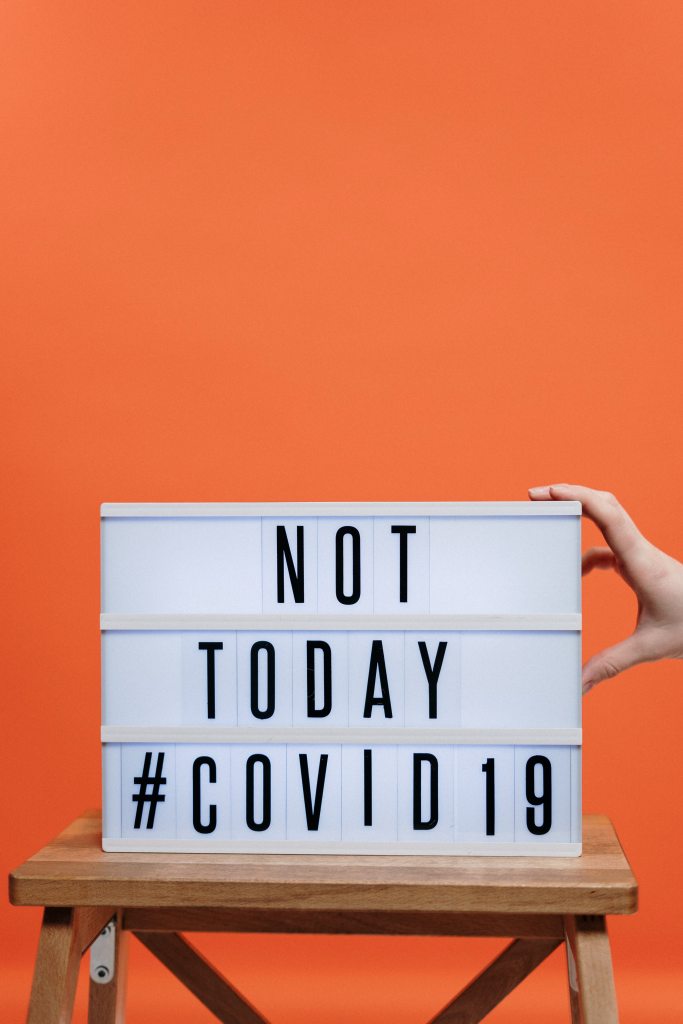
With too much going on in the world right now: Global pandemics, climate change catastrophic warnings, digitalization of almost everything, dramatic presidential elections, second lock downs in several countries… no wonder we might feel a little bit lost about what the future is holding for us.
I started to reflect about how lost I personally felt in the last couple of weeks with so much information flowing here and there. I struggled to remain present in my own experience of life. But with so much information and data to digest, I felt that I fell down to a fake reality bubble where I lost contact with what actually means being present in the daily life, and paid more attention at global events, and everything else trendy right now; whatever appears in my newsfeed.
For my own good, I decided to take a break and stop. Stop with all the frenzy. Go back to who I used to be, before the influence of so much information and networks going around me, getting me saturated with information I am supposed to accept.
I decided to go back to basics.
These are the 3 main basics I applied to my life, and I hope they can help you as well in getting back to your own self again… if like me, you are starting to feel it is time for a change.
Back to Basics 1: Stay tuned with the seasonality of the nature
I remember reading not so long ago this recommendation from Jim Rohn, American philosopher and entrepreneur, of living according to the natural seasonality of life; Apparently, we are one of those species that have been deliberately ignoring this valuable source of wisdom that nature can be.
As like with all living things, we are also affected by the year’s seasons and we go through our personal seasonality cycle as well.
Winter: Time for reflection and healing bounds
In winter, the days are cold, and short. The night prevails. This is the time to “Stay in the cave”. Winters are times to sit back and recover. Winter might be perceived as dark, cold and unpleasant; but they are a great opportunity to heal your bounds. Sleep longer, take your time.
It is important as well to be able to live through our own winters. For us it means, times of uncertainty, when we feel things are not going well. There are all kinds of winters, and we must be able to go through all of them: Economic winters, health winters, winters with a broken heart. We know deep inside us, this is not going to last forever and even when we reach our darkest hour, we can be certain that it will be followed by light.
Winters are the time to grow strong, like Jim Rohn suggests.
Spring: Time to plant your seeds
This is the time when light is showing up again. We start to get our energy back. The days last longer, and we can get more things done. This is the perfect time to plan for the summer, which is when we reach our highest energy peak to make things done.
Opportunity follows recession, so we must take advantage of this new opportunity to go back on track with our lives. Spring is the time to plant the seeds to harvest for the coming autumn and winter. What does it mean for us? It means that is time to acquire skills, to keep learning, to start planning and acting on our goals.
Springs are a marvelous opportunity to craft our personalities and understand at what we are going after.
Summer: Time to enjoy your harvest and protect your crops
In summer, we feel at the peak of our energy. Days are warm and the longest of the year. These are times in our lives to enjoy, and start getting the first harvest from the seeds we planted during spring.
However, it is also the time to protect what you have planted. Rohn explains that there are two things we should look after during summer: To defend your crops and to learn how to defend your values.
A good classic example: During a winter time, you went through a hard time and gained weight. During spring, you planned for a weight reduction strategy and started working on it. By the time it is summer, you lost most of the weight and start to enjoy the benefits. However, should stay alert; you should keep the discipline of eating well and exercise; otherwise the nice breeze of summer can make you feel a bit chilly and relax on your measures, only to find in autumn that you gained weight again.
Autumn: Time to take responsibility
Autumns… I love them. The weather is fantastic. Not too hot, not too cold. The colors of the trees are a wonderful spectacle; all those gorgeous colors of fading greens, intense orange, reds and yellows.
Autumn in the human life sense of living, means… take responsibility. We overcame the winter, we flourished during our springs, we defended what we earned during summer, and now it’s time to take full responsibility of what we have built. It is time to keep maintaining that weight, to keep working on that important project, to keep improving ourselves. It is also time to embrace new beginnings, as the year is coming to an end; this is the perfect time to leverage what we have learned and go on and plan for what is coming.
As Rohn rightly says: “Accepting full responsibility is one of the highest forms of human maturity- and one of the hardest- is when you officially pass from childhood to adulthood”.
Autumns are times to accept, that everything that happened to us was our own making and thus our own responsibility. But that has also a liberating feeling: When something is fully our responsibility, it means we have the full power to change it.
Acting in flow with the life natural seasons, makes us much more aware and alert of our environment and of our own personal growth.
Back to Basics 2: Stay present. Say good bye to social media… at least for a while
It is not surprising that we spend much more of our time looking at screens than ever before. At the moment you wake up, you check your phone for the newest feed notifications. What does the weather look like today? No need to go up from bed and open the window; you just need to open your weather app, and it will tell you how cold or warm it is.
What happened while I was sleeping? This is no mystery anymore. Just open any social media app and you will see what was going on while you slept: That hot diet that everyone is doing, the latest election results in that remote country you’ve never been to, who got married and who had a new baby… everything you want (or don’t want ) to know, is at the click of the screen.
In the online world, there is not seasonality; no time to reflect. Everything is hot, everything is urgent, everything is breaking news for an instant… everything is fast and frenzy. You have to be fully involved 24/7 or you miss it… you miss the online Disneyland…and whereabouts of people.
This is obviously not natural. Our brains are not wired to be receiving such vast and annoying amounts of information that sends us to oblivion. Our online persona disconnects us from the real world, from what is happening NOW.
So, an absolute back to basics during these busy and unpredictable times: Disconnect yourself from social media. Give it a break. Find yourself again. Find that internal voice that has not changed by external opinions and that still stands against massive manipulation from the online social morality standards.
As I discussed in a previous post, networking in mass quantities is not only useless but also dangerous. You want to feel you belong somewhere and maybe when you post a photo of yourself or an experience of your life you get some likes. But what is the satisfaction on it? A merely enjoyment of few seconds of fame. Five minutes later you are history for the Instagram and Facebook newsfeed.
In my opinion, it is better to forge fewer but very deep relationships, face to face, than trying to reach hundreds or thousands virtual people with nothing.
Back to basics 3: Connect again with your craft
There was a time, when one of the human’s greatest gifts was weighted on what you could do with your hands. There were no high tech devices, no outsourcing services… no one that did the job for you. So, people learned to craft things for themselves. We harvested our own food. Cooked it. We designed and sewed our own clothes. We built our own homes. People used to take pride on what they were capable to do with their bare hands.
I think this still is as relevant today as it used to be in the past. We lost a bit our sense of craftmanship and love for what we could do with our own hands, because the current modernity delivers everything already made for us, at the exchange for some paper money or electronic money. We have let other people do the craftmanship for us, in the name of “Convenience”. I think actually, this is a step back for any human.
We pride ourselves for our craftmanship- our ability to create and design something by ourselves. Let it be a table, a house, a painting or a book- craftmanship is the highest expression of human creativity.
I really believe we should go back to that. Instead of getting ourselves lost in an online world where everything is defined for us and pushes us to be just consumers; we should aim again for crafting as much as we can. To create, to express our humanity through our craft.
At the end, we are not machines. We are humans. Let’s venerate our humanity. Let’s go back to it.
Let’s go back to our basics!